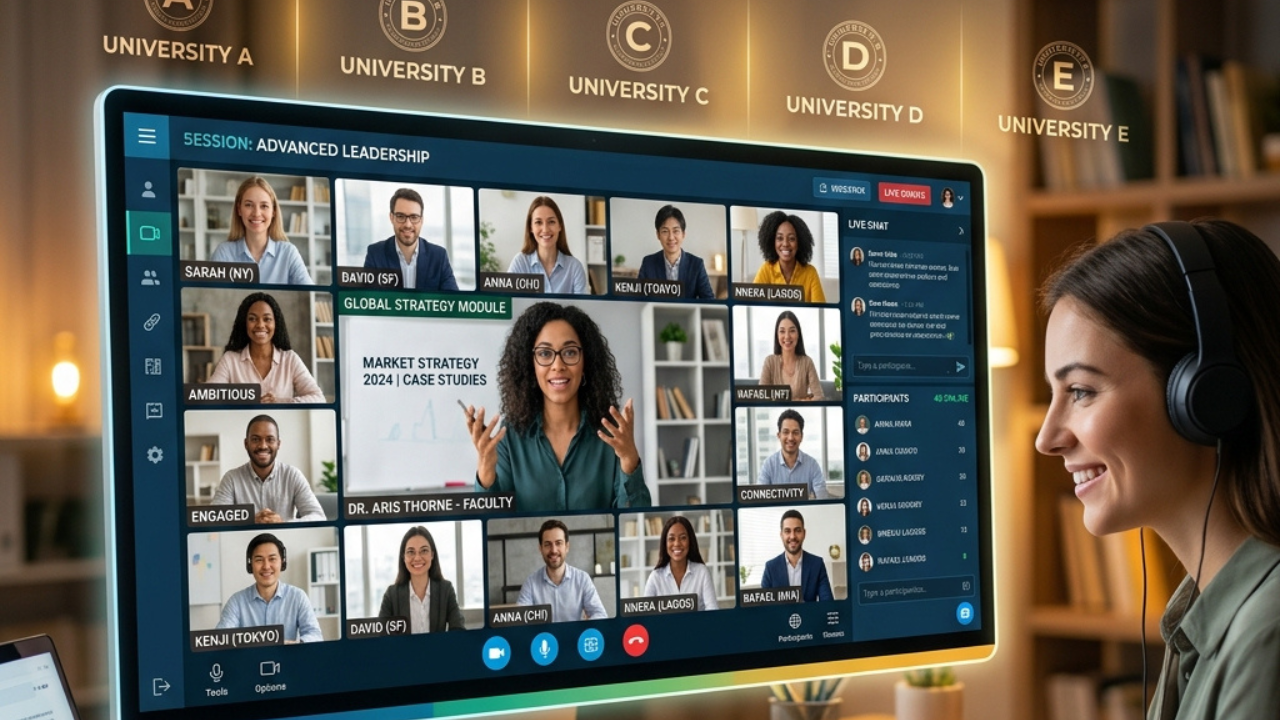
Earning a Master of Business Administration used to mean putting your career on pause, packing up your life, and relocating to a university campus. Professionals had to choose between advancing their education or maintaining their current salary and career momentum. That dynamic has fundamentally shifted. High-speed internet and advanced learning platforms have bridged the gap between prestigious business schools and ambitious professionals across the globe.
Online MBA programs have surged in popularity, offering a rigorous academic experience that rivals traditional on-campus degrees. Top-tier universities now provide digital curriculums taught by the same esteemed faculty, ensuring distance learners receive an identical standard of education. This shift has democratized access to elite business training, allowing working professionals to learn advanced management principles, financial strategies, and leadership skills from their living rooms.
Pursuing an MBA online in the USA serves as a highly strategic career move. It signals to employers that you possess exceptional time-management skills and a strong drive for self-improvement. You can immediately apply the concepts you learn in evening classes to your workplace the very next morning, creating a real-time loop of learning and practical application. For those looking to pivot industries, climb the corporate ladder, or launch their own ventures, selecting the right online program is a critical first step.
Factors to Consider When Choosing an Online MBA Program
Selecting an online MBA requires careful evaluation of several moving parts. The right program should align with your learning style, budget, and long-term professional aspirations.
Accreditation: Ensuring Quality and Recognition
The foundation of a reputable MBA program is its accreditation. You want to look for programs accredited by recognized bodies, most notably the Association to Advance Collegiate Schools of Business (AACSB). AACSB accreditation indicates that the university meets rigorous academic standards and undergoes continuous peer review. Graduating from an accredited institution ensures that potential employers will respect your degree and that your academic credits hold actual value.
Program Format: Asynchronous vs. Synchronous
Online learning is not a monolith. Programs generally fall into two categories: synchronous and asynchronous. Synchronous programs require you to log in at specific times for live lectures and real-time discussions, closely mimicking a physical classroom. Asynchronous programs allow you to watch pre-recorded lectures and complete assignments on your own schedule. Many universities offer a hybrid approach. You must decide whether you prioritize the flexibility of asynchronous learning or the structured, interactive nature of synchronous classes. Additionally, determine if you want to enroll part-time to accommodate a heavy work schedule or full-time to accelerate your graduation date.
Curriculum and Specializations
A general MBA provides a solid foundation in business principles, but specialized tracks allow you to tailor your education to a specific industry. If your goal is to transition into fintech, supply chain management, or healthcare administration, look for universities that offer robust concentrations in those areas. Review the core course requirements and the list of available electives to ensure the curriculum directly supports your target career trajectory.
Faculty Expertise and Student Support Services
The quality of instruction directly impacts your learning outcomes. Investigate the faculty members teaching the online courses. Are they tenured professors who also teach on-campus, or are they adjunct instructors? Beyond the classroom, robust student support services are vital. Distance learners should have access to dedicated academic advisors, technical support, and comprehensive career coaching.
Cost, Financial Aid, and Return on Investment
Tuition for online MBA programs varies wildly, ranging from $20,000 to well over $100,000. It is essential to calculate the total cost of attendance, including technology fees and course materials. Investigate financial aid options, scholarships, and employer sponsorship programs. Most importantly, evaluate the potential return on investment (ROI). Review the program’s employment reports to see the average salary increase and signing bonuses for recent graduates.
Top Online Universities for MBA Programs in the USA
To help you navigate the crowded landscape of digital business education, we have evaluated five of the most highly respected online MBA programs in the United States.
Indiana University (Kelley School of Business)
The Kelley Direct Online MBA consistently ranks among the top programs nationwide. Indiana University has heavily invested in digital education, building a proprietary platform that delivers a highly engaging learning experience.
A major highlight of the Kelley Direct program is its extensive customization. Students can choose from multiple majors and complete over half of their credits as electives, allowing for a deeply personalized academic journey. The program also requires two brief, in-person residencies, fostering strong connections among peers and faculty. Student testimonials frequently highlight the Kelley Business of Medicine track, tailored specifically for healthcare professionals, and the dedicated career coaching that helps graduates secure lucrative promotions.
University of North Carolina (Kenan-Flagler Business School)
UNC’s MBA@UNC program blends supreme flexibility with rigorous academic standards. The structure heavily favors synchronous learning, with live, webcam-enabled classes capped at 15 to 20 students. This intimate setting encourages active debate and networking.
Admission requirements are stringent, demanding competitive GMAT or GRE scores, though waivers are available for highly experienced candidates. Kenan-Flagler boasts exceptional career outcomes, with a dedicated career and leadership team supporting online students. Graduates frequently land roles at top consulting firms, financial institutions, and Fortune 500 technology companies, demonstrating the undeniable strength of the UNC brand in the corporate world.
University of Southern California (Marshall School of Business)
USC Marshall approaches the online MBA with an integrated curriculum designed specifically for the digital environment. Rather than breaking subjects into isolated courses like accounting or marketing, Marshall combines these disciplines into comprehensive thematic modules.
This program shines in its emphasis on interactive online learning and faculty research. Students benefit from high-quality multimedia content and regular access to professors who are leading researchers in their fields. The Trojan Family alumni network is famously loyal and active, providing online students with invaluable connections across the globe, particularly in the entertainment, real estate, and technology sectors of the West Coast.
University of Florida (Warrington College of Business)
For professionals seeking maximum flexibility and exceptional value, the UF Warrington Online MBA is a formidable contender. Consistently achieving high rankings for both quality and ROI, this program caters to heavily scheduled working professionals.
Students can choose between a one-year accelerated track for those with an undergraduate business degree, or a traditional two-year track. The asynchronous format allows you to view lectures entirely on your own time. Despite the distance, the alumni network is vast and highly engaged. UF Warrington strikes an excellent balance between a respected academic reputation and a tuition rate that remains highly competitive compared to private institutions.
Carnegie Mellon University (Tepper School of Business)
The Tepper Part-Time Online Hybrid MBA is heavily analytics-focused, making it a premier choice for data-driven professionals. Carnegie Mellon is globally renowned for its expertise in technology and quantitative analysis, and the online MBA curriculum reflects this strength.
The program emphasizes innovative thinking and practical applications, requiring students to participate in immersive Access Weekends multiple times a year. These short, in-person gatherings take place in various major cities and focus on networking, leadership training, and collaborative projects. Tepper provides a distinctly global perspective, equipping graduates to manage complex, cross-border business challenges in an increasingly digitized world.
Frequently Asked Questions About Online MBAs
Do employers respect online MBA degrees?
Yes. Most employers view an online MBA from an accredited, reputable university exactly the same as an on-campus degree. In fact, your diploma and transcripts will rarely specify that the degree was completed online. Employers highly value the discipline and time-management skills required to complete a rigorous academic program while working full-time.
How long does it take to complete an online MBA?
The timeline varies based on the program structure and your enrollment status. Accelerated programs can be completed in as little as 12 to 14 months. Traditional, part-time online MBAs generally take 24 to 36 months to finish. Many universities allow students up to five or six years to complete the coursework, accommodating unexpected life or career changes.
Is the GMAT or GRE always required for admission?
No. While many top-tier programs still require standardized test scores, there is a growing trend of universities offering GMAT/GRE waivers. These waivers are typically granted to applicants with extensive professional experience, advanced degrees, or exceptional undergraduate GPAs. Always check the specific admission requirements of your target schools.
Taking the Next Step in Your Business Career
Choosing to pursue an online MBA is a significant commitment of time, energy, and financial resources. However, the potential rewards—expanded professional networks, advanced leadership skills, and significantly increased earning potential—make it a worthwhile investment for ambitious professionals.
Start by outlining your specific career goals and determining which program formats and specializations align with those objectives. Research accredited institutions, request information packets from their admissions offices, and reach out to current students or alumni on professional networking platforms. By carefully evaluating your options, you can select a program that propels your career to the next level.